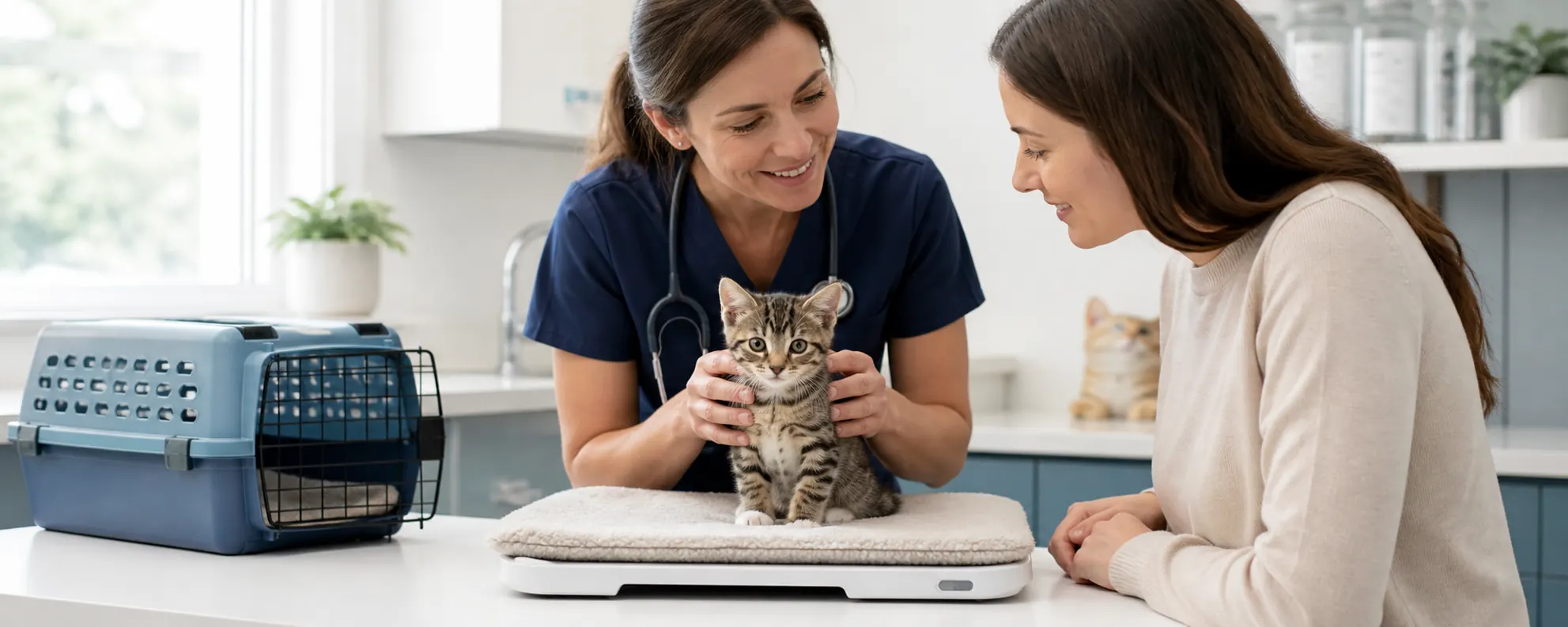
The first six months set the foundation for your kitten's entire life. During this window kittens need a series of exams and booster vaccines, strategic deworming, viral testing, and a plan for spay or neuter timing.
Just as important, kitten visits are where we help you get the big questions right: litter box setup, scratching outlets, socialization, nutrition, and introducing other pets. Bring your questions — new-owner coaching is half the appointment.
The kitten visit series
- Comprehensive exams at each booster visit
- FVRCP and rabies vaccine series
- FeLV/FIV testing and leukemia vaccination
- Deworming and flea prevention startup
- Microchipping
- Nutrition, litter box, and behavior guidance
What to expect
Kitten visits run every 3-4 weeks until about 16 weeks: exams, staged vaccines, deworming, FeLV/FIV testing, and microchipping, plus unhurried time for new-owner questions on litter training, socialization, nutrition, and scratching. We'd rather answer ten small questions now than treat one big problem later.
Kitten Care guides & handouts
Take-home guides from our resource library related to this service.
Frequently asked questions
When should my kitten's first vet visit happen?
Within the first week of coming home, regardless of age — we confirm health, start the vaccine and deworming schedule, test for FeLV/FIV, and catch congenital issues early. Bring any paperwork from the breeder, shelter, or rescue.
What should I feed my kitten?
A diet formulated specifically for kittens (or 'all life stages') until about 12 months — kittens need roughly twice an adult's calories per pound plus different mineral balances. We'll recommend specific options and portions at your first visit.
When should my kitten be spayed or neutered?
Typically around five to six months, before the first heat cycle — which nearly eliminates mammary cancer risk in females and prevents spraying and roaming in males. We'll confirm the ideal timing for your kitten at the booster visits.
What is the most important thing to know about raising a healthy kitten?
We're hopeful that you got your kitten when they're about seven or eight weeks. That's an excellent time for a kitten to be separated from their litter and mom. Behavior is really important, and parasite control and preventative care vaccinations. We'll also have discussions about making sure that an indoor kitty has an enriched and healthy life.
What are the right and wrong ways to pick up my kitten?
Oh, interesting question. I generally recommend picking up your kitten from the underneath side and maybe putting your hand up here to control the head a little bit. And scoop them underneath your arms. You can hold their little paws in the front, also. A football hold is probably the best way to do it.
How can I tell if my kitten is happy and healthy?
Happy and healthy kittens have fun and energetic behaviors. They're curious and constantly playing. You don't need a television anymore when you get a kitten, as they are so fun. It's mostly about setting them up for correct boundaries in the household so that we can make sure that their behaviors are consistent with a happy life for everybody.
What are some products I might need for my kitten?
You need to get kitty litter, some toys, a litter box, a bed, and then some canned food and dry food that you've talked over with your veterinarian as being a right choice.
How can I get the most out of my first vet visit with my new kittens?
When you come to TJ Mex Vet, we spend a good 30 to 45 minutes with you on the first visit. We're going to provide you with a lot of information. There is more in our cat health handouts. But we're going to talk to you about all aspects of kitten care, including behavior, feeding, and litter box acclimation.
What will a veterinarian look for during my initial kitten care visit?
We're going to look at things like behavior and temperament, so we can have a conversation with you to make sure that that's consistent with how they're being handled at home. Sometimes I'll have a family come in with young kids, and we need to make sure that the kitten's being handled properly. So we're also going to give the kitten a complete physical. Eyes, ears, and nose are important in kitties. We see a lot of upper respiratory viruses in kittens. We'll listen to the chest to make sure that the lungs and the heart are good, so it's an overall exam.
What are some early signs and symptoms of health issues in your kitten?
As I said, kittens have a fair amount of upper respiratory infections, so sneezing, watery eyes, and clogged up noses can be signs of health issues. And many kittens can get through these fine, but they quite often will need help and supportive care from the veterinarian to help them through that because some of them get severe. They can have high fevers; they can get dehydrated, and they might not want to eat. And so we need to stay on top of things because kittens are tiny, and we need to support them through this. Also, diarrheas are common. And there are some terrible viruses that kittens perhaps have been exposed to before you've gotten them. Anything out of the norm should warrant a trip in here right away for us to have a look.
Why is it important to avoid self-diagnosing possible kitten health problems?
Again, kittens are tiny, and they can go from feeling okay to being critically ill pretty quickly. Their glucose levels, hydration, and other things like that can change dramatically over a short period. So if you think things are a little bit off, they're probably a little further off than what you realize because cats are good at hiding illness. So please come in sooner rather than later.
What do I need to know about kitten behavior?
There's a wide range of kitten behavior because all cats are different. I've had many cats over my lifetime, and they all have unique personalities. It's hard to give a short answer to this question. I will tell you that it is important that you do understand kitten behavior. There's so much information online, and we would direct you to the best place to go to get some good answers.
How often does my kitten need to go to the veterinarian?
Your kitten should come to the veterinarian about every three weeks until they're about four months of age. We have a series of things we're going to want to talk about and a series of vaccines. Most importantly, we're going to follow the progress of your kitty behavior-wise and health-wise and make sure that they're headed in the right direction.
What vaccinations does my kitten need?
We're generally going to do the core vaccines for all cats, which is the FVRCP - the upper respiratory viruses, and panleukopenia. And we're also going to do the leukemia vaccine and rabies. But they're not all done at the same time. We spread them out over a series, but they're all very critical vaccines.
Does my kitten need vaccinations, even if I keep them inside?
Yes, we recommend core vaccines for your kitten because... I'll just tell you a personal story. My cats are indoor cats. My son left his door open, and a bat flew in, and my cat killed the bat. I think about 15% of bats in California carry rabies—maybe even higher than that. If my cat had not been vaccinated for rabies, we would have a potentially challenging situation on our hands. And cats get out all the time. We want them protected with the FVRCP and leukemia.
Ready to schedule?
Request an appointment or call our team — we pick up pets at meeting points from Greater Los Angeles to San Diego and bring them to our partner hospital in Tijuana.